
Sustainability Strategy
NADEC’s sustainability strategy is aligned with its role as one of KSA’s leading food companies and its contribution to the Kingdom’s food security priorities. The strategy is grounded in sustainable domestic food production, responsible resource use, product quality and safety, operational efficiency, people development, governance, and long-term value creation.
Sustainability is embedded across NADEC’s diversified portfolio of Dairy & Beverages, Agriculture, Snacks, and Protein. Through integrated farming, manufacturing, and distribution capabilities, the Company works to strengthen food availability, improve supply reliability, enhance quality standards, and support more efficient use of resources across its value chain.
NADEC’s approach focuses on practical outcomes that can be measured and improved over time. These include water-efficient agriculture, controlled-environment farming, responsible waste management, product safety, supply-chain resilience, employee capability building, regulatory compliance, and business continuity.
NADEC the Leading Food Business, Nourishing People and the Planet
Nurture resilient economies by partnering with suppliers
Grow agricultural productivity and food security in KSA through regenerative agriculture
Create a safe, inclusive, nurturing culture that inspires excellence and enables all to excel
Transform food production and distribution in KSA through resource optimization
Empower healthy lifestyle choices in KSA producing nourishing products people need
Achieve ecosystem health by operating within local and global environmental limits
Sustainable finance, partnership, innovation and governance

Our Ambition and Values Towards Sustainability
NADEC’s sustainability ambition is to grow responsibly while serving consumers and customers with trusted Saudi-made food products across essential categories. The Company’s approach is guided by responsibility, innovation, transparency, and operational discipline, supported by leadership commitment and collaboration across its operations.
As NADEC strengthens its established Dairy & Beverages business and scales Agriculture, Snacks, and Protein, sustainability remains closely linked to the Company’s transformation. Advanced Agriculture supports more efficient domestic production through improved farming methods, better crop selection, controlled environments, and resource management. Protein supports the development of higher-quality, locally produced and packaged red meat formats, with a focus on operational efficiency, product standards, and value-chain control.
NADEC’s sustainability priorities are designed to support responsible growth, strengthen resilience, and contribute to KSA’s food security objectives. By integrating sustainability into daily operations, capital allocation, and business planning, the Company aims to create long-term value for consumers, customers, employees, shareholders, and the Kingdom.
Sustainability Pillars

Sustainable food production
NADEC contributes to the Kingdom’s food security priorities through local dairy, agriculture, wheat, premium produce, and protein capabilities. Its integrated operating model supports domestic availability, product quality, and supply reliability across essential food categories.

Resource efficiency and modern agriculture
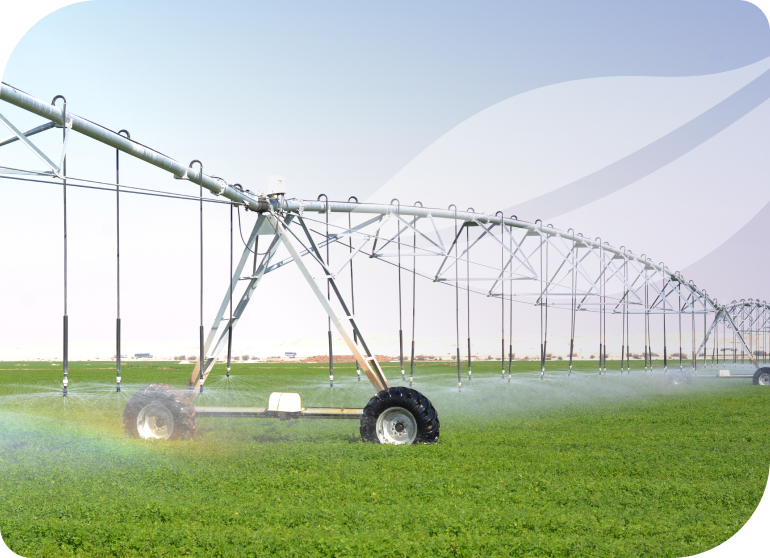
NADEC is focused on improving agricultural efficiency through responsible water management, controlled environments, crop selection, improved genetics, and technology-enabled farming. These priorities support higher-quality domestic production while improving resource use.

Quality, safety, and nutrition
NADEC serves consumers through trusted Saudi-made products in categories where freshness, safety, consistency, and reliable availability matter. Its capabilities across farming, manufacturing, processing, quality control, and distribution support strong standards across the value chain.

Operational efficiency and waste reduction
NADEC’s supply-chain and digital capabilities support better planning, availability and efficiency across fresh and short-shelf-life categories. Demand planning, route optimization, automation, and supply-chain controls can help reduce waste and strengthen execution.

People and local capability building
NADEC’s social contribution is linked to employment, skills development, and the advancement of local food and agricultural capabilities. The Company’s growth across Agriculture and Protein supports the development of specialized expertise in Saudi food production.

Governance, compliance and resilience
NADEC’s sustainability approach is supported by governance, compliance monitoring, risk management, regulatory engagement, and business continuity practices. These capabilities strengthen accountability, operational resilience, and disclosure discipline as the Company grows across its diversified portfolio.
NADEC’s Net Zero Decarbonization Plan
Establish the baseline
To establish an accurate Scope 1, 2 and 3 baseline footprint and commit to set SBTi Net Zero targets
Implementation done in 2025
- Implemented processes, systems and data collection structures to enable performance tracking on an annual basis.
- Identified and prioritise efficiency and reduction opportunities linked to Scope 1, 2 and 3 emissions.
- Established Scope 1, 2 and 3 emissions reporting in line with GHG protocol

Reduce Emissions by 42%
Aspire to have approved SBTi targets aligned with 1.5°C and to achieve Net Zero by 2050
Reduce Emissions by 42%
Aspire to have approved SBTi targets aligned with 1.5°C and to achieve Net Zero by 2050
Reduce Emissions by 77%
Aim to track performance against targets as well as recalculate and validate target every 5 years
Reduce Emissions by 77%
Aim to track performance against targets as well as recalculate and validate target every 5 years
Reduce Emissions by 90%
To achieve Net Zero emissions by 2050
Reduce Emissions by 90%
To achieve Net Zero emissions by 2050
Materiality Assessment
We conducted our first materiality assessment in 2024 to identify and prioritize its most significant sustainability-related topics. In 2025, NADEC enhanced its approach by following a structured eight-step process to determine NADEC's most material ESG topics, applying a double materiality lens for the first time and aligning with GRI, IFRS, and CSRD standards. The process began with value chain mapping to identify where the most significant environmental and social impacts occur, followed by a landscape review of global benchmarks, academic research, and government priorities to capture emerging risks and opportunities. These findings were then tailored to NADEC's context, considering its Vision 2030 alignment, operational realities, and stakeholder expectations.
Topics were next grouped, defined, and validated through internal stakeholder surveys to ensure relevance and alignment with business priorities. Each topic was assessed for both an impact materiality perspective, examining NADEC's impacts on people, the environment, and the economy across its operations and value chain, and a financial materiality perspective, evaluating potential effects on the business, including revenues, costs, regulatory exposure, and reputation. The topics were then ranked by significance and validated with leadership to ensure ownership and alignment with business strategy.
Sustainable and regenerative agriculture
High
Low

Climate change and GHG emissions
High
High
Circular economy, waste management and packaging
High
High
Water stress and responsible use
High
High
Biodiversity and land use
High
High
Pollution control and ecosystem protection
Low
Low
Energy efficiency and clean energy transition
Low
Low
Community engagement and socio-economic development
High
Low
Food safety and quality assurance
High
High
Nutrition and consumer health
Low
High
Human capital
Low
High
Smallholder inclusion and empowerment
Low
Low
ESG governance and transparency
High
Low

Business ethics and risk management
High
Low
Sustainable procurement and supply chain
Low
High
Innovation
Low
Low

